
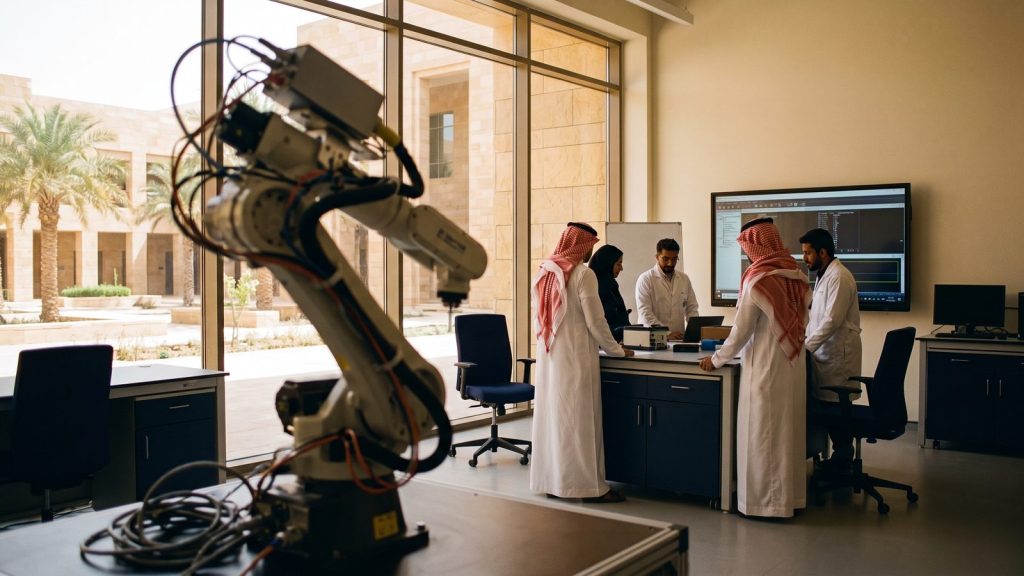

Technology transfer sits at the heart of Saudi Arabia’s economic transformation. The Kingdom is not only buying technology, it is systematically acquiring the ability to operate, adapt, and eventually create it locally, and Vision 2030’s localization agenda makes that ambition explicit. For international companies, well-executed transfer is increasingly part of winning Saudi business. For Saudi organisations, it is the fastest route to capabilities that would take a generation to build from scratch. Both sides need the transfer designed properly.
What this covers
- Technology scouting and assessment: identifying and evaluating technologies abroad that fit your strategy and the Kingdom’s priorities.
- Transfer agreement structuring: licensing, joint development, and know-how terms that define exactly what is transferred, to whom, and under what protections.
- Localization planning: the practical sequence by which operation, maintenance, and adaptation capabilities move to local teams.
- Knowledge transfer design: training, secondments, documentation, and shadowing structured so capability genuinely changes hands.
- Global research collaboration: connecting Saudi organisations with international universities and research centres for joint programmes.
- Regulatory and IP considerations: export controls, IP protection, and Saudi regulatory requirements addressed before they become obstacles.
How Innovant delivers
We manage transfer as a capability project, not a paperwork exercise. Your engagement defines what receiving successfully means in observable terms: what the local team must be able to do, unassisted, by the end. Agreements are negotiated to protect both the provider’s rights and the recipient’s ability to actually use what it is paying for. Then we manage the human side, the training, the documentation, and the handover milestones, because technology moves in documents but capability moves in people.
Transfer done well leaves both partners stronger. Talk to an advisor about your technology transfer plans.